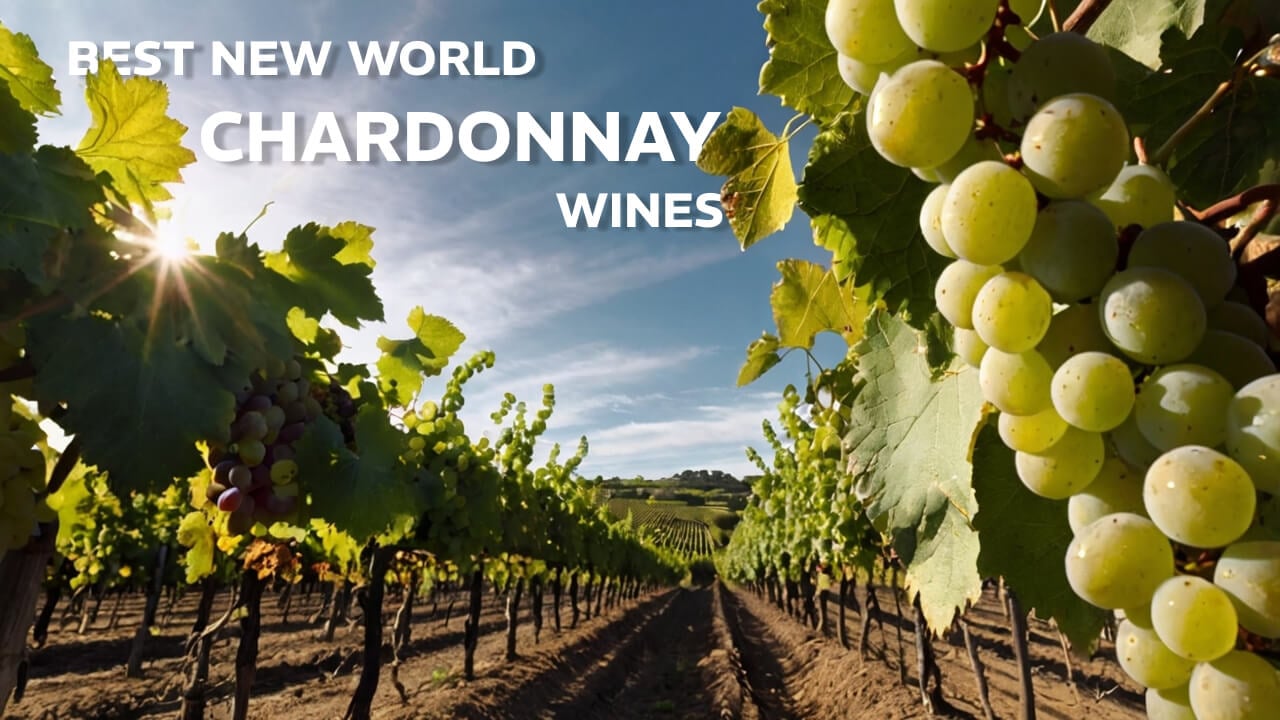
Chardonnay is one of the most popular white wines in the world and definitely, one of the most universally loved. Finding a Chardonnay in the shop is like meeting an old friend, and it is always a reliable choice. However, as we will discover in this article, this wine can also have incredible depth and variety.
While varietals such as Pinot Noir are sensitive to the terroir that they are grown in, Chardonnay wine is influenced more by the wine-makers methods. That makes it a fascinating grape for blind tasting (particularly in the case of New World Chardonnay), as each bottle offers a different spin.
What is Considered New World in wine?
When we talk about the New World in wine, we essentially mean wine produced in any country outside of Europe and the ancient wine-making regions of Georgia or the Middle East.
The New World countries that you’ll see in stores most often are Australia, New Zealand, the USA, Argentina, Chile and South Africa.
Israel is an in-between sort of place because although it has an ancient history of wine-making, the modern Israeli wine industry has only taken shape recently. The country is still developing its style, and Israeli wines can be novel and refreshing, so for those reasons, we will consider it as part of the New World for this article.
FAQ’s About New World Chardonnay Wine
-
What is a New World Chardonnay?
A New World Chardonnay is Chardonnay produced in any country where the tradition of wine-growing was imported from Europe. Chardonnay is originally from the Burgundy region of France but is such a versatile grape that it has spread all over the continent, and beyond, to New World regions.
California is arguably the most famous New World Chardonnay region, but you can also find stunning examples of the wine in Washington, South Africa, South America, and Australasia. -
What's the difference between New World and Old World Wine?
It is often said that New World wines exhibit riper-tasting fruit and higher alcohol levels than Old World regions. There’s a simple reason for this: New World regions are, generally speaking, hotter than the Old World, so grapes can ripen faster.
Another interesting distinction is that Old World regions put more of an emphasis on terroir - connecting their brand to their home. You will often see Italian or French wines named after the vineyard they came from, or the wider region. In general, New World regions are more likely to pick and choose from different locations and promote a brand that is not as connected to a specific terroir.
Regarding Chardonnay, Old World versions (and particularly those from Burgundy) can be refined, oaky and contain concentrated fruit flavours. A stereotypical New World wine shows riper fruit flavours and a round mouthfeel.
Perception vs Reality
However, most of these are just generalisations. They help to make decisions in a blind tasting or for food pairing, but shouldn’t be considered as hard and fast rules. In reality, there can be a wide variety of nuances between wine regions, and many New World regions are comparable to the Old World in terms of quality and terroir. Puglia in Italy, for example, can be just as hot as regions of Australia, and parts of California’s coast are as cool as Burgundy.
There is, however, a tangible link between all of the ripe, classically "New World" flavours of Chardonnay from California, Australia and New Zealand. In 1957, a clone of Chardonnay was exported from California to the small town of Gingin in Western Australia. It became known as “the Gingin clone”. It did particularly well in the region of Margaret Valley, and also spread to New Zealand in 1971. The clone produces excellent Chardonnay, with intense flavours, and it may explain some of the similarities that people notice between wines from different New World regions.
Best New World Chardonnays - Quality, Taste, Reveal
Chateau Montelena Chardonnay
This is a Chardonnay from a producer that helped to put Napa Valley on the world wine map. It has classic flavours of stone fruits, green apple and citrus, with wonderful lifting acidity. It is also relatively full-bodied and shows hints of malolactic fermentation without being too buttery. It is bright, delicious and distinctly Californian.