
Tannins are often used to describe a wine’s profile, but their role or what they are is usually little understood. In a sentence, tannins dry out your mouth – they are usually most noticeable after you take a sip. The bigger, bolder, and more red the wine is, the more presence they are likely to have.
In this article, we explain everything you need to know about tannins, how to appreciate them, and what they actually contribute to your wine.
What Are Tannins?
The Definition of Tannins
Tannins are chemical compounds found in plants. They are important for protecting plants from predators and may contribute to plant growth. For that reason, the level of tannins in a plant is also an important factor in deciding when to harvest. Allegedly, the word “tannin” also comes from the process of “tanning”, as tannin-rich plant extracts are traditionally used to tan leather.
How Tannins Work in Wine
When you taste a wine, tannins contribute two things: bitterness and astringency. Bitterness is a flavour, whereas astringency is more of a texture, commonly defined as how dry your mouth feels after a sip of wine. In the grand scheme of wine, tannins also contribute to ageing. As a red wine ages, tannins disappear and the bitterness softens, allowing deeper flavours to come forward.
Where Do Tannins Come From?
Tannins in Grapes
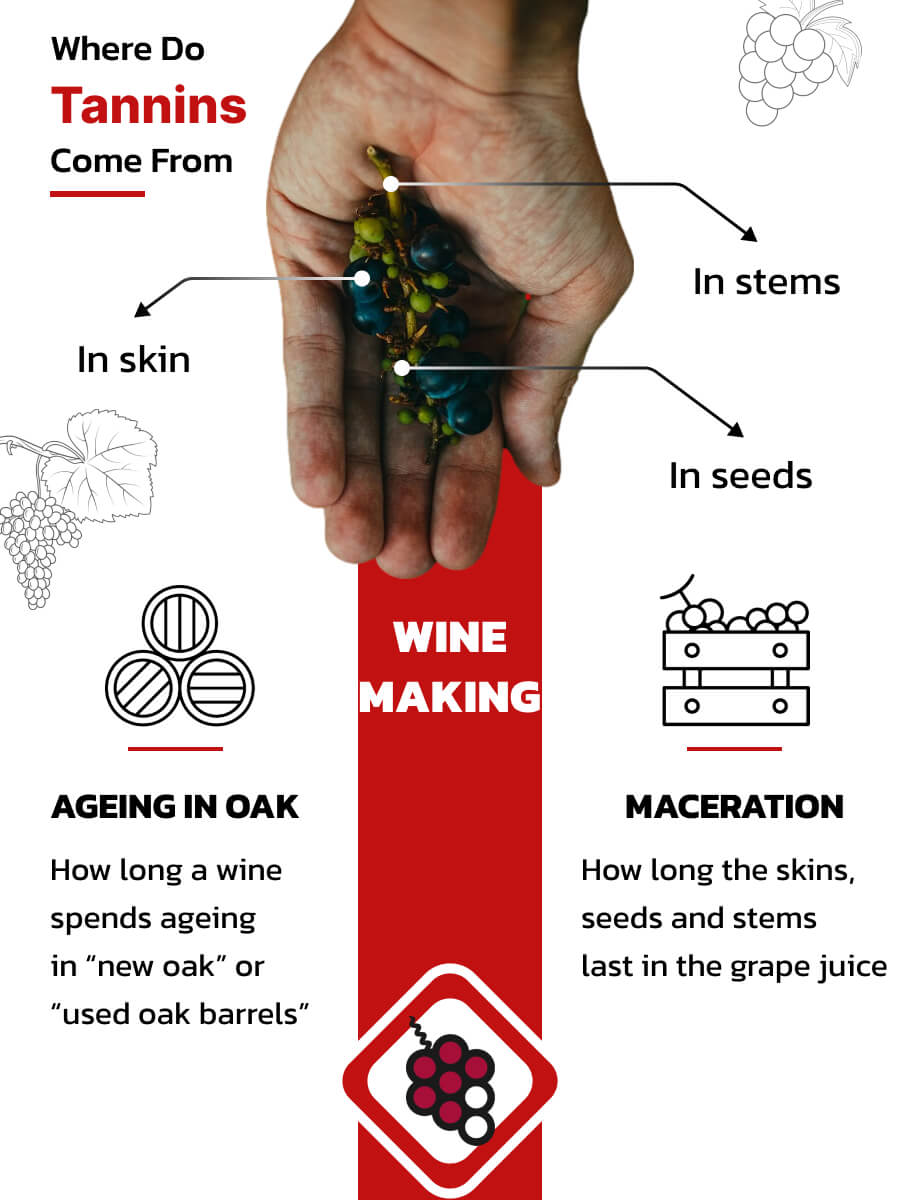
In grapes, tannins are particularly present in the skin, seeds, and stems. This is why red wines are more tannic than white wines. White grapes are rarely fermented with their skins, while red wines can be made with stems, seeds, and skins all included.
Winemaking Techniques
Throughout winemaking, tannins leach into the grape juice, adding structure and texture. Several winemaking processes influence the levels of tannins – for example, how heavily macerated the grapes are (in simple words, how much they have been “stomped”), whether the stems are left in or out during fermentation, and how long the wine spends ageing in oak barrels.
Tannins Beyond Grapes
Beyond the grapes themselves, tannins are also present in the walls of oak barrels. How long a wine spends ageing in these barrels is another important factor. Over time, oak tannins will seep into the mixture, adding a distinctive bitter, almost leather-like taste, and potentially increasing the wine’s potential for ageing in the bottle.
When we see buzzwords like “new oak” or “used oak barrels”, this also gives us hints towards what a wine’s tannic structure is like, or what the winemaker’s goal was with this particular wine. Newly constructed oak barrels contribute more tannins, with more of a raw, bitter profile, while oak barrels that have already been used for fermentation offer more subtle tannins. This is why winemakers often use a mixture of both new and old, as they seek a balanced level of tannins.
How Tannins Affect the Taste of Wine
Astringency and Bitterness
Have you ever made a cup of black tea and forgotten to take the tea bag out, or forgotten about it entirely? When you try drinking the cold cup of tea later, you find that it’s incredibly strong, and the flavour is bitter and puckers your mouth slightly (this sensation is astringency). That’s the influence of tannins, seeping out from the tea leaves over time, and it’s a good example for understanding how they work in wine.
Whether you enjoy tannins is a personal thing. Some people enjoy the mouth-puckering quality, some people don’t, and for some people, too many tannins can upset their stomach. However, they are an excellent indicator of how long a wine can be aged.
In young versions of many wines, like the famous Barolo from Northern Italy, the tannins can be too strong to be enjoyable, and they soften as the wine ages in a cellar. So, a good balanced amount of tannins (which does not necessarily mean a lot) is often seen as a marker of quality, and whether the wine is ready to be enjoyed.
Tannins and Food Pairing
There’s a reason why red wines, meat, and cheese are a match made in heaven, and it’s largely because of tannins. When we’re eating and drinking, tannins bind with and are absorbed by the protein and fat in food. This creates a symbiotic relationship – your wine becomes less astringent, allowing deeper flavours to come through, and revealing whole new aspects to the wine. On the other hand, the tannins also cleanse your palate of fats and proteins, allowing the true flavour of the meat, cheese, or whatever else you happen to be eating to shine through. Tannin-rich wines work particularly well with protein-rich and fatty foods, while low-tannin wines can be saved for lighter meals.
Types of Wine and Their Tannin Levels
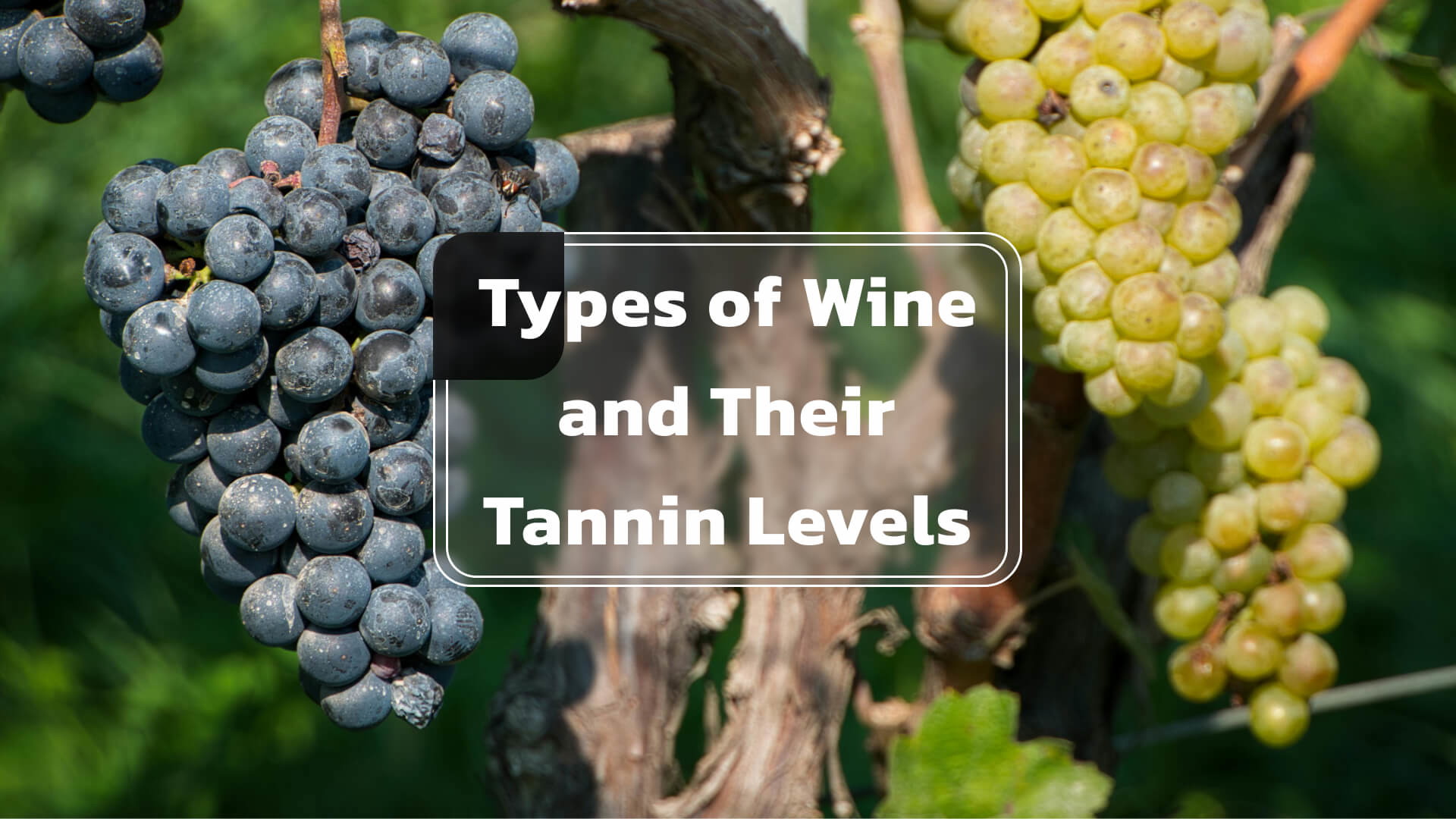
Due to the thickness of their skin, their stems, or simply the environment they grew in, some grapes are naturally more tannic than others. In this section, we will explore some of the most iconic examples from each tier of tannins, and give you some buzzwords to attempt to describe what they feel like. Disclaimer: they may not make sense until you try them yourself.
High-Tannin Wines
Some of the best-known high-tannin wines include Cabernet Sauvignon, Barolo, Sangiovese, Mourvèdre, and Malbec. So why are these wines more tannic than others? Let’s take Nebbiolo (used to make Barolo and Barbaresco wines) as an example; it is widely regarded as the most tannin-rich winemaking grape in the world. Its home is Piedmont, a cool and foggy region, with relatively poor soils. These conditions lead to grapes with thick skins – and not only that, but Nebbiolo grapes are comparatively small to other winemaking grapes, so the ratio of pulp to skin is high. This, combined with the winemaker’s choice to leave the skins in during fermentation, is the main reason why Barolo and Barbaresco are perceived as being highly tannic and mouth-drying. To try “the king of red wine” out, we recommend this Barolo from G.D. Vajra, which is a perfect example of a high-tannin wine. Its tannins are often described as “grippy” or “chewy”, adding a wonderful texture to each sip.